CAM reconciliation that reconciles to your rent roll.
Stop rebuilding CAM/NNN in a spreadsheet every year. Atrium Elite computes each tenant’s pro-rata share, recoverable vs. billed, and the year-end true-up — tied to the same rent roll your dashboard reads, and posted to an append-only ledger.
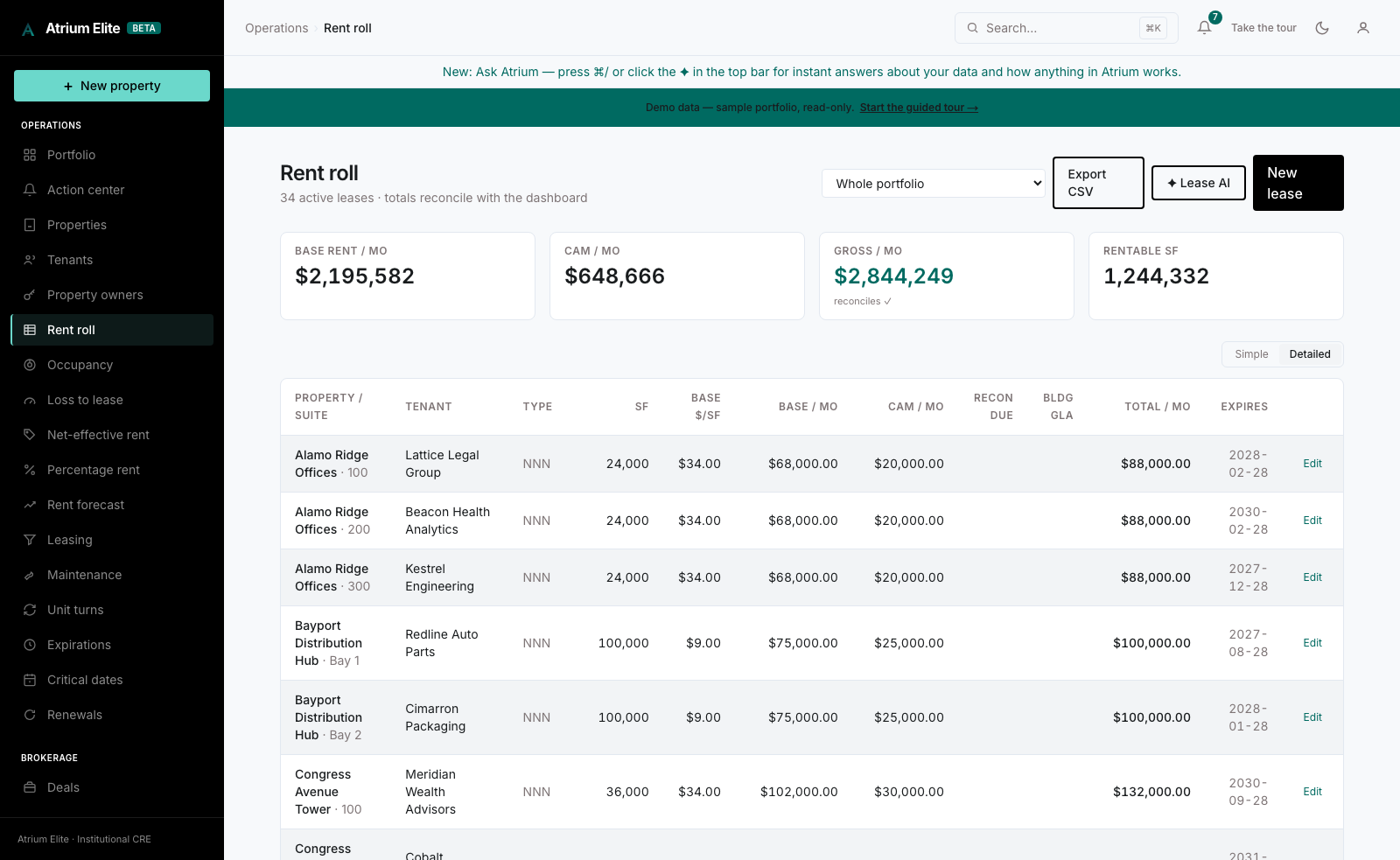
The rent roll that CAM reconciliation reconciles to — same leases, same recoverable amounts, in the live demo.
Pro-rata, computed not keyed
Each tenant’s share of recoverable operating expenses is derived from their leased area and lease recovery terms — base year, caps, exclusions — so the math is consistent across every tenant and every period.
Recoverable vs. billed, then the true-up
See what was recoverable against what you actually billed through the year, and post the year-end true-up — credits and additional billings — in one reconciled step instead of a fragile workbook.
Audit-ready by construction
Every true-up posts to a hash-chained, append-only ledger and ties back to the rent roll. The same number shows up on two screens because it is the same number — not a re-keyed copy.
Why CAM reconciliation breaks in spreadsheets
CAM/NNN reconciliation is one of the most error-prone tasks in commercial property management: pro-rata shares, base-year stops, caps and exclusions, recoverable categories, and a year-end true-up — usually rebuilt in a fresh spreadsheet each year. A single broken formula or a stale rent-roll copy produces a true-up that does not match the books, and the dispute lands with your tenant. The problem is not the math; it is that the math lives apart from the rent roll it depends on.
How Atrium Elite handles it
Atrium computes CAM reconciliation directly against the live lease data — leased area, recovery terms, and the operating expenses for the period — so pro-rata shares and true-ups always reflect the current rent roll. Finalizing a reconciliation posts the pro-rata true-ups to the transaction ledger and locks the period, so the reconciliation, the owner statement, and the rent roll all agree. It is part of the same commercial-native platform that handles leasing, owner and tenant portals, and — when you need it — fund administration.
Built for commercial operators
This is built for commercial real estate, where CAM/NNN is central — not a residential tool with a recoveries add-on. If you manage retail, office, or mixed-use and your reconciliation season means weeks in Excel, this replaces the workbook with a reconciled, audit-ready process.
Frequently asked
What does CAM reconciliation software actually do?
It computes each tenant’s share of recoverable common-area and operating expenses (their pro-rata share), compares what was recoverable to what you billed during the year, and produces the year-end true-up — the credits or additional billings owed. Atrium does this against your live rent roll and posts the result to an audit-ready ledger.
Does it handle base-year stops, caps, and exclusions?
Yes — recovery terms including base year, caps, and exclusions are part of the lease model, so they flow into the reconciliation rather than being re-entered each cycle.
How does it stay reconciled to my books?
Finalizing a reconciliation posts the pro-rata true-ups to an append-only transaction ledger and locks the period. The rent roll, the reconciliation, and the owner statement read from the same data, so they agree by construction.
Is this only for CAM, or the whole property?
CAM reconciliation is one part of a full commercial-native platform — rent roll, leasing, owner and tenant portals, brokerage, and fund administration are all on the same data model.
Can I see it on real data?
Yes. The live demo runs a full sample commercial portfolio, including the rent roll the reconciliation ties to — no login required.
Retire the CAM spreadsheet.
See CAM reconciliation tied to a live rent roll in the demo, or run it against your own portfolio.